
Ontario procurement software for public sector organizations
Simplify procurement from planning through contract management and reporting. Ontario procurement software from bids&tenders helps public sector organizations reduce administrative effort, strengthen governance, improve transparency and create a more intuitive experience for buyers and suppliers.
Built for Canadian public procurement, the platform connects planning, sourcing, electronic submissions, evaluations, awards, contracts and reporting in one clear digital process.
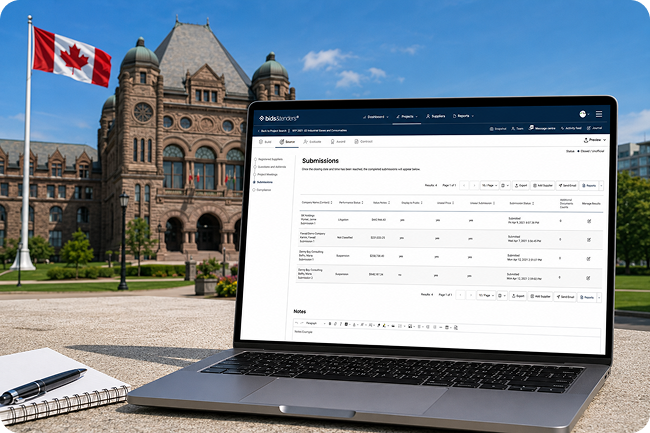
Why Ontario organizations are modernizing procurement
Procurement teams are managing more work and higher expectations, often with manual tools and disconnected processes.
Reduce manual work
Spreadsheets, email, and shared folders can increase administrative effort and make procurement harder to manage.
Strengthen governance
Clear workflows, consistent reporting, and complete records help support transparency, compliance, and accountability.
Improve collaboration
Connected processes help departments work more consistently while making it easier for suppliers to find and respond to opportunities.
Digital procurement brings planning, sourcing, evaluations, contracts, and reporting together in one place—helping Ontario public sector organizations simplify their work while strengthening procurement practices.
What Ontario public sector buyers should consider
Choosing procurement software is not only a technology decision. Ontario public sector organizations also need to consider how a platform will support their policies, governance requirements, supplier obligations and day-to-day procurement practices.
Requirements vary by organization and procurement. Before selecting a solution, buyers should confirm which legislation, directives, trade agreements and internal policies apply.
Supporting the complete procurement lifecycle
Bring each stage of procurement together in one connected process—from early planning through reporting and continuous improvement.
- 1 Planning
- 2 Solicitation
- 3 Electronic submissions
- 4 Evaluation
- 5 Award
- 6 Contract management
- 7 Reporting
When procurement activities are managed across spreadsheets, email, and shared folders, information can become difficult to track and processes can become inconsistent. A connected digital platform improves visibility, reduces manual handoffs, and helps teams manage procurement with greater consistency and confidence.
Benefits of procurement software for Ontario buyers
Modern procurement software helps Ontario public sector teams spend less time managing administrative tasks and more time supporting transparent, well-governed procurement.
Reduce administrative effort
Automate repetitive tasks, reduce manual handoffs, and keep procurement information in one place.
Improve transparency
Create consistent, documented processes that make procurement activity easier to track and explain.
Reduce procurement risk
Use structured workflows, clear approvals, and centralized records to maintain consistency and audit readiness.
Improve supplier participation
Give suppliers a clear, accessible way to find opportunities, communicate with buyers, and submit responses.
Support better decision making
Use procurement data and reporting to monitor activity, identify trends, and support informed planning.
Standardize procurement
Help departments follow consistent workflows, templates, and approval processes across the organization.
Designed for Ontario public sector organizations
Ontario public sector organizations have different mandates, policies, and procurement requirements. However, they share a common need for procurement processes that are clear, consistent, and easy to manage.
Municipalities
Support procurement across departments while improving visibility, consistency, and accountability.
School boards
Simplify sourcing and evaluations while supporting transparent, well-documented decisions.
Colleges and universities
Coordinate complex procurement activities across faculties, departments, and stakeholders.
Utilities
Manage procurement, contracts, and supplier relationships with stronger oversight and clear records.
Healthcare organizations
Support collaborative procurement while managing documentation, approvals, and organizational risk.
Shared service organizations
Standardize procurement across participating organizations while maintaining clear roles and oversight.
Different organizations. Common procurement goals.
Digital procurement helps organizations support core public procurement principles while adapting workflows to their own policies and operational needs.
Fairness
Consistent treatment and objective processes
Transparency
Clear communication and documented decisions
Accountability
Defined responsibilities and complete records
Compliance
Alignment with applicable policies and requirements
Value for money
Decisions informed by quality, risk, service, and long-term value
Applying Buy Ontario requirements
Ontario’s Buy Ontario framework sets procurement requirements that covered public sector and municipal organizations must apply. What applies depends on the organization, procurement category, value, and relevant directive.
Requirements vary by organization and procurement.
Confirm the applicable directive, scope, procurement category, value threshold, and current requirements before preparing a solicitation.
Three policy-readiness priorities
Confirm what applies
Identify the applicable directive, entity type, procurement category, value threshold, and current requirements relevant to the procurement.
Maintain supporting records
Keep supplier information, assessments, approvals, decision rationale, and required documentation together so the organization can clearly support its decisions.
Monitor and report
Prepare to provide procurement information when required and review official guidance as requirements, thresholds, or strategic categories change.
Technology supports policy readiness. A connected procurement platform can help centralize documents, approvals, supplier information, and reporting. Each organization remains responsible for interpreting and applying the requirements that govern its procurement.
Why Ontario buyers choose bids&tenders
Ontario procurement teams need more than software. They need intuitive technology, practical procurement expertise, and responsive support that helps them improve how procurement works.
Built by procurement professionals
bids&tenders combines modern technology with practical procurement knowledge. The platform and support experience are designed around public procurement principles such as fairness, transparency, accountability, governance, and value.
Supports the complete procurement lifecycle
Bring planning, sourcing, electronic submissions, evaluations, awards, contract management, supplier performance, and reporting together in one connected platform.
Easy for buyers and suppliers
Clear workflows reduce administrative effort for procurement teams while helping suppliers find opportunities, communicate, and submit complete responses with confidence.
A partner in procurement modernization
Implementation is collaborative—not simply a software deployment. bids&tenders supports phased adoption, training, onboarding, and ongoing success.
Designed for Canadian public sector procurement
The platform recognizes that policies, terminology, governance, and applicable obligations vary by province and organization while supporting consistent procurement best practices.

Secure, accessible procurement for Ontario’s public sector
Public procurement depends on trust—trust that confidential information is protected, access is appropriately controlled, and every decision can be clearly documented. bids&tenders supports Ontario buyers with role-based permissions, secure electronic submissions, detailed audit trails, and accessible experiences for buyers, suppliers, and evaluators.
The platform is designed to support recognized security, compliance, and accessibility expectations, including SOC 2 Type II-aligned security practices, ISO certifications, WCAG-compliant experiences, and Ontario’s AODA requirements. Structured workflows and complete procurement records also help teams follow organizational policies, strengthen audit readiness, and support applicable trade agreement obligations, including CFTA and CETA.



Whether your organization is replacing spreadsheets and manual processes or expanding its digital procurement capabilities, bids&tenders helps Ontario public sector teams simplify procurement, strengthen transparency and governance, and create a better experience for buyers and suppliers.
See how one connected platform can support your procurement goals—from planning and sourcing through evaluations, contracts, and reporting.
Frequently asked questions
What is procurement software?
Procurement software helps organizations plan, manage, document, and report on procurement activities in one digital environment. Depending on the platform, it may support procurement intake, solicitation development, electronic submissions, evaluations, awards, contract management, supplier performance, and reporting.
The goal is to reduce administrative effort while supporting more consistent, transparent, and well-governed procurement.
How does procurement software improve transparency?
Procurement software creates a clear record of activity throughout the procurement process. Centralized communication, documented evaluations, approval records, audit trails, and controlled workflows make decisions easier to track, explain, and review.
This helps procurement teams demonstrate that suppliers received consistent information and that decisions followed an established process.
How does procurement software help evaluators?
Procurement software gives evaluators a structured and consistent way to review supplier submissions. Digital scorecards, weighted criteria, evaluator comments, conflict-of-interest tracking, automatic calculations, and consensus scoring can improve collaboration and documentation.
These tools support the evaluation process, but they do not replace professional judgment or the need for clear, objective evaluation criteria.
What types of Ontario organizations use procurement software?
Procurement software can support a wide range of Ontario public sector and broader public sector organizations, including:
- Municipalities
- School boards
- Colleges and universities
- Utilities
- Healthcare organizations
- Conservation authorities
- Shared service and cooperative purchasing organizations
Each organization has different policies and operational needs, but common priorities include fairness, transparency, accountability, compliance, and value for money.
What is the difference between procurement software and purchasing software?
Procurement software generally supports the broader procurement lifecycle, including planning, competitive sourcing, supplier submissions, evaluations, awards, contracts, and reporting.
Purchasing software is usually more focused on operational transactions after a purchasing decision has been made, such as requisitions, purchase orders, approvals, invoicing, and payment processes.
Some platforms support both. Organizations should define whether they need to modernize competitive procurement, transactional purchasing, or the full source-to-pay process before selecting a solution.