
Procurement software for Canadian buyers
Simplify procurement from planning to reporting. bids&tenders helps Canadian buyers manage sourcing, evaluations, awards and contracts in one connected platform—reducing administrative effort while strengthening transparency and control.
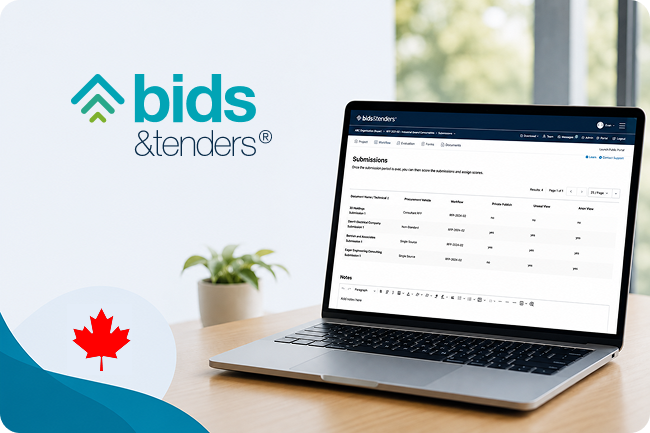
What is procurement software?
Procurement software is a digital system for managing the full procurement lifecycle, from intake and sourcing to evaluations, awards, contracts, supplier performance and reporting. It centralizes workflows, records and collaboration so buyers can manage procurement with greater consistency, transparency and control.
Better procurement outcomes, backed by real platform activity
Procurement management software brings sourcing, evaluations, awards, contracts and reporting into one connected workflow. Buyers gain clearer oversight, more consistent processes and stronger audit readiness, while reducing manual coordination across teams.
19,805 procurement opportunities posted
Centralized workflows give buyers clearer oversight of procurement activity.
95,200 supplier registrations
A broad supplier network supports stronger competition and market reach.
61.7% submitted near closing
Reliable digital workflows support buyers during deadline-sensitive periods.
10.3% more supplier questions
Structured communication gives buyers earlier visibility into clarification needs.
The data above reflects activity recorded on the bids&tenders platform between May 2025 and May 2026.
Why procurement software matters in Canada
Procurement software gives Canadian buyers greater control over complex workflows, approvals, evaluations, records and reporting. It supports more consistent, transparent and accessible procurement while allowing organizations to apply their own policies, governance requirements and jurisdiction-specific processes.
Transparency and governance
Canadian public sector buyers must be able to show how procurement decisions were made. Centralized workflows create clearer records of approvals, evaluations, communications and awards, supporting audit readiness and defensible decision-making.
Jurisdictional flexibility
Procurement requirements vary across federal, provincial, territorial, municipal and broader public sector organizations. Configurable workflows allow buyers to reflect their own policies, delegated authorities and applicable trade agreement obligations.
Accessibility and open competition
Accessible procurement processes reduce barriers and support broader supplier participation. Digital tools can make opportunities, documents and communications easier to access while supporting requirements such as AODA in Ontario.
Oversight and reporting
Canadian organizations often manage procurement across multiple departments and locations. A shared platform gives buyers and leadership clearer visibility into active projects, approvals, contracts, renewals and reporting.
Procurement features across the full lifecycle
Manage procurement from planning through contract oversight in one connected platform. bids&tenders gives Canadian buyers the structure, visibility and control to reduce administrative effort, strengthen governance and support consistent procurement processes.
Plan
Bring structure to procurement from the start
Standardize intake requests, involve procurement earlier and give teams clearer visibility into upcoming work before a solicitation is created.
- Structured procurement intake
- Standardized project creation
- Planning and workload visibility
Source
Manage solicitations through one consistent process
Create and publish opportunities while keeping documents, addenda, meetings and supplier questions organized in one centralized workspace.
- Public, invitational and limited/sole source
- Solicitation templates
- Document and addenda management
- Structured supplier communication
Receive
Receive secure and complete electronic submissions
Replace paper-based processes with controlled digital submissions that support confidentiality, validation and a complete record of submission activity.
- Secure electronic bid receipt
- Submission compliance checks
- Addenda acknowledgement
- Complete submission audit trails
Evaluate
Coordinate fair and transparent evaluations
Give evaluators a structured digital process for reviewing, scoring and documenting submissions while maintaining consistency across the evaluation team.
- Weighted and point scoring
- Evaluator collaboration
- COI and/or NDA tracking
Award and manage
Maintain control after the evaluation is complete
Standardize award approvals and keep contracts, renewals, insurance records, changes and important milestones visible throughout the contract lifecycle.
- Award documentation and approvals
- Supplier notifications
- Contract and renewal tracking
- Insurance and change-order records
Report
Turn procurement activity into useful insight
Bring project, contract and workload information together so procurement teams and leadership can monitor activity and make better-informed decisions.
- Configurable dashboards
- Project and workload reporting
- Contract and spend visibility
- Saved and shareable reports
Core benefits for Canadian buyers
For Canadian buyers, procurement software should do more than digitize tasks. It should reduce administrative effort, strengthen accountability and give teams the structure and visibility to manage procurement with confidence across departments and jurisdictions.
Reduce administrative effort
Standardize routine work, reduce manual handoffs and replace disconnected spreadsheets with one consistent procurement process.
Improve transparency
Keep approvals, communications, evaluations and decisions in a centralized, traceable record that supports public accountability.
Strengthen governance
Apply defined roles, permissions, approvals and audit trails while maintaining consistent processes across the organization.
Support supplier participation
Make opportunities, documents and communications easier to access, understand and respond to across the Canadian market.
Improve collaboration
Connect procurement teams, departments, evaluators, finance, legal and other stakeholders through shared digital workflows.
Measure procurement performance
Track projects, workloads, cycle times, contracts and procurement activity to give buyers and leadership clearer insight.
Considerations for procurement software in Canada
Canadian buyers operate within different legislative, policy and governance environments. Procurement software should provide the flexibility, security and visibility to support local requirements without assuming that one process applies to every organization.
Jurisdictional flexibility
Procurement practices differ across federal, provincial, territorial, municipal and broader public sector organizations. Configurable workflows allow buyers to reflect local policies, approval structures and delegated authorities.
Trade agreement awareness
Software does not determine legal compliance. It can, however, support consistent posting, timelines, documentation and recordkeeping for procurements subject to applicable Canadian trade agreements.
Accessibility
Accessible procurement processes make it easier for buyers, evaluators and suppliers to participate confidently. Ontario organizations may also need to consider AODA requirements alongside broader accessibility standards.
Privacy and security
Buyers should assess data hosting, role-based access, audit trails, data protection and how confidential procurement and supplier information is managed throughout the process.
English and French requirements
Organizations serving bilingual communities should consider whether procurement documents, portals, notifications and supplier communications need to support both official languages.
Public accountability
Procurement software should make it easier to show what happened, who approved each step and how decisions were reached through clear, traceable records.
Organizations should always follow applicable legislation, trade agreements, organizational policies and legal guidance. Procurement software supports these requirements but does not replace professional judgement.
Trusted by procurement teams across Canada






Secure and accessible procurement for Canadian organizations
Canadian buyers need digital procurement processes that protect sensitive information, support accountability and remain accessible to everyone involved. bids&tenders provides role-based access, secure information management, comprehensive audit trails and accessible user experiences across the procurement lifecycle.
The platform supports recognized security and accessibility requirements, including SOC 2 Type II aligned practices, ISO certifications, WCAG, ADA and AODA. It also gives procurement teams the structure and documentation needed to support organizational policies and applicable trade agreement obligations, including CETA and CFTA.



See how bids&tenders brings planning, sourcing, evaluations, awards, contracts and reporting into one connected platform designed for Canadian procurement teams.
Frequently asked questions
What is procurement software?
Procurement software is a digital system for managing the procurement lifecycle, including intake, sourcing, evaluations, awards, contracts, supplier performance and reporting. It centralizes workflows, records and collaboration so buyers can manage procurement with greater consistency, transparency and control.
What should Canadian buyers look for in procurement software?
Canadian buyers should look for configurable workflows, secure electronic submissions, structured evaluations, audit trails, contract visibility, accessible user experiences and reporting. The platform should also accommodate organizational policies, delegated authorities and jurisdiction-specific requirements.
Can procurement software support Canadian trade agreement requirements?
Procurement software cannot determine legal compliance. It can support consistent posting, timelines, documentation, approvals and recordkeeping for procurements subject to applicable trade agreements. Organizations remain responsible for following relevant legislation, policy and legal guidance.
How does procurement software improve transparency?
Procurement software keeps approvals, communications, evaluations, award records and supporting documents in a centralized, traceable process. This gives buyers a clearer audit trail and makes procurement decisions easier to review and explain.
Is procurement software suitable for organizations with decentralized procurement?
Yes. A shared platform can give procurement teams, departments, evaluators and leadership clearer visibility into active projects, approvals, contracts and reporting while supporting consistent processes across locations and business units.
How much does procurement software cost in Canada?
Pricing varies based on organizational size, required modules, implementation scope and support needs. Buyers should assess total value, including implementation, training, administrative savings and long-term platform support—not only licence cost.
How long does procurement software implementation take?
Timelines depend on workflow complexity, data requirements, integrations and change-management needs. A phased implementation can help organizations begin with priority processes and expand over time.