
Your Complete eProcurement Solution
Crafted by Procurement Professionals, for Procurement Professionals, bids&tenders is committed to helping organizations simplify their procurement process from end to end, entirely online. Our eProcurement essentials package, a robust cloud-based platform, includes the following modules: Bid Management, Online Submissions, Evaluations, Contract Management, and Reporting. As well as access to our supplier network with over 175,000 suppliers!
Intake
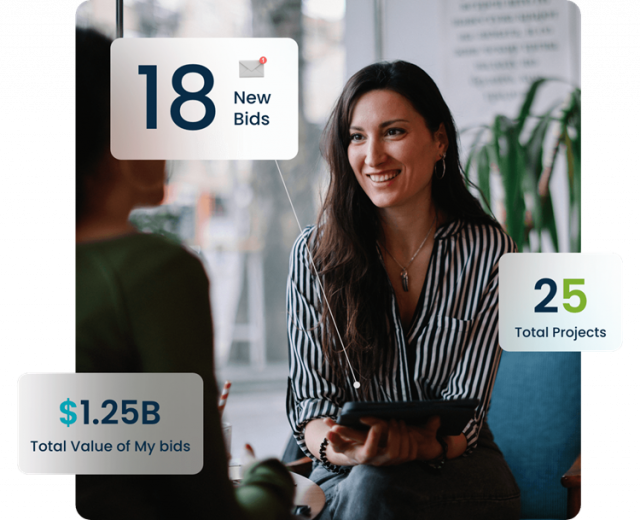
The aim of Intake Essentials is to provide all team members within your organization with an effortless way to initiate requests for goods, services, construction, or services related to goods. It’s about simplifying the process and enabling your team to focus on what they do best. Whether you’re requesting office supplies or embarking on a major construction project, Intake Essentials will get things started quickly and efficiently.
Bid Management
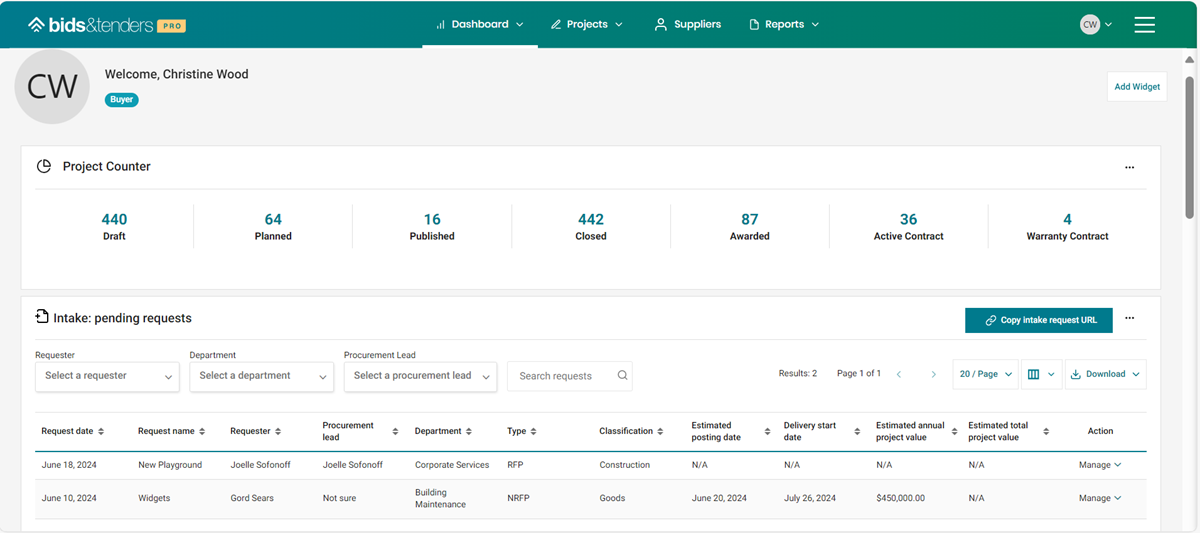
Create and post bids onto your branded self-service public portal or send invitations to prequalified suppliers. Configure projects from a template or customize your own and then manage your team members, supplier meetings and notifications, and more.
Features
- Create and post projects effortlessly, whether public or invitation only onto your branded procurement portal.
- Opportunities will also be centralized on our main supplier opportunity page, and interested suppliers will receive notifications about new opportunities in their field.
- Efficiently configure projects using templates or start from scratch.
- Manage your procurement team members, project meetings, supplier notifications, questions, addenda and more.
- Post unofficial results online, instantly!
Online Submissions
Manage registered suppliers, supplier questions, and electronically receive submissions securely in one central platform. The compliance checker ensures only compliant bids are submitted for evaluation.
Features
- Electronically receive submissions securely in one central and auditable online platform on time - no more late bids!
- Compliance checker ensures only compliant bids are submitted for review - no wasted time reviewing and rejecting non-compliant submissions.
- Within seconds of the bid closing, your bid analysis report is ready. The report combines submission data into one standardized spreadsheet and automatically provides calculations to determine which bidder(s) offers the best value.
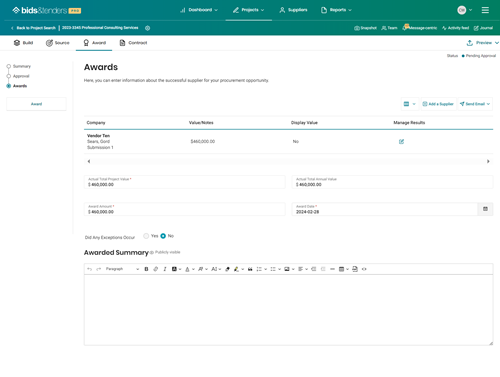
- Award projects (in whole or in parts), store documentation, send out award notices or reject letters, and post your award results online.
Evaluations
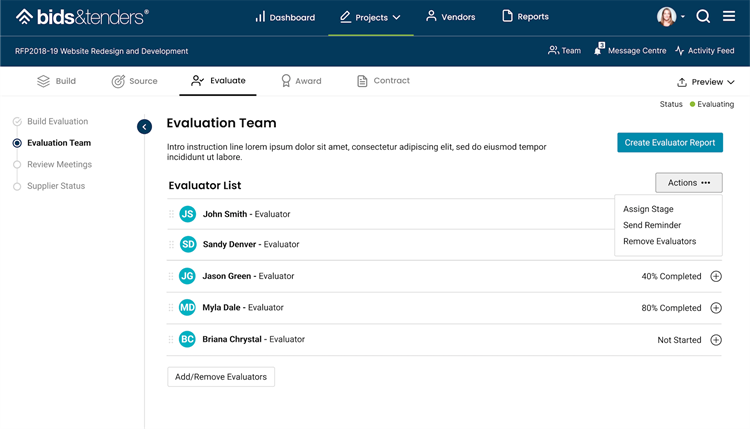
Set up evaluation templates and provide access to online evaluations for your reviewers. Expedite the process with automatic bid analysis and digital scorecard tools.
Features
- Get your projects setup with evaluation fast with simplified setup and configuration.
- Have more control over how review decisions are made with flexible review meeting options.
- Conduct review meetings efficiently and with clarity through a powerful review meeting experience.
- Have flexible control over who can adjust scores during review meetings through user permissions.
Award Projects
Award projects to suppliers and store associated documentation and integrate with contract management functions.
Contract Management
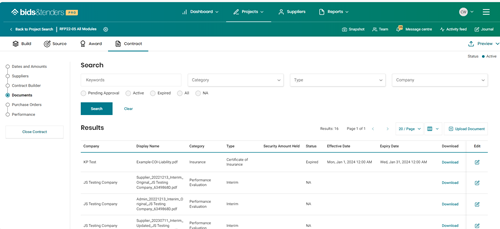
Manage contracts, expiry notifications, purchase orders, change orders, insurance certificates and other associated documentation online.
Features
- Import existing contracts into bids&tenders.
- Execute contracts/agreements electronically online and upload relevant documents including Duly Executed Agreements, Purchase Orders, change orders, insurance certificates, and more.
- Create contracts from scratch, a template, or replicate existing projects.
- Suppliers manage expired documentation online through the contract portal.
Reporting & Dashboard
Easily track and manage spend, team resource loading, and upcoming project tasks to optimize your procurement processes.
Features
- Easily track and manage project status, budget, no-bid responses, supplier questions, and more.
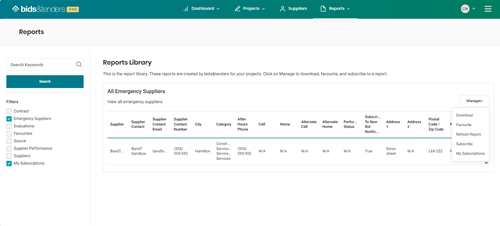
- Build custom reports or utilize the Report Library.
- Create personalized dashboard views for individual responsibilities.
- Access the online supplier database, including Certified Diverse Suppliers and Emergency Suppliers.
- View and/or download history of supplier reports associated to your organization.

Compliance and Security
bids&tenders ensures compliance with trade agreements and legislative requirements. Exceeding standards set out in the AODA, ADA, WCAG 2.0, PCI, ISO 27001, BPS, CETA, CFTA, DDoS protection, and bank grade data encryption. Trusted by government agencies, local professionals, and industry experts.



FAQ
What is a standard procurement system?
A standard procurement system is a centralized platform designed to streamline and manage the entire procurement process for public sector organizations. It provides a standardized framework for sourcing, evaluating, and awarding contracts, ensuring transparency, efficiency, and compliance with government regulations.
How does a standard procurement system streamline purchasing processes?
A standard procurement system streamlines purchasing processes by:
- Centralizing information: Providing a single repository for all procurement-related documents, such as requests for proposals (RFPs), bids, and contracts.
- Automating workflows: Automating routine tasks like bid distribution, evaluation, and contract management, reducing manual effort and errors.
- Enhancing collaboration: Facilitating collaboration between procurement teams, suppliers, and stakeholders through online communication and document sharing.
- Improving transparency: Increasing visibility into the procurement process through real-time tracking and reporting, promoting accountability and preventing corruption.
What are the benefits of using a standard procurement system?
The benefits of using a standard procurement system include:
- Cost savings: Reducing procurement costs through efficient processes and competitive bidding.
- Time efficiency: Streamlining workflows and automating tasks, leading to faster decision-making and contract execution.
- Improved compliance: Ensuring adherence to government regulations and procurement policies.
- Enhanced transparency: Promoting accountability and preventing corruption through increased visibility.
- Better supplier relationships: Building stronger relationships with suppliers through fair and transparent processes.
How does a procurement system ensure compliance with purchasing policies?
A procurement system ensures compliance with purchasing policies by:
- Enforcing rules: Incorporating policies and procedures into the system’s workflows, ensuring that all steps of the procurement process adhere to regulations.
- Providing audit trails: Tracking all actions taken within the system, creating a clear audit trail for compliance reviews.
- Generating reports: Producing reports on procurement activities, helping organizations identify and address any deviations from policies.
- Integrating with other systems: Connecting with other systems, such as financial management and accounting systems, to ensure data accuracy and consistency.
What is bid management?
Bid management is the process of overseeing and coordinating all activities involved in a bidding process, from issuing a request for proposal (RFP) to selecting a winning bidder. It involves tasks such as:
- RFP development: Creating clear and concise RFP documents that accurately reflect the organization’s requirements.
- Bid evaluation: Assessing bids from suppliers against evaluation criteria and selecting the most suitable bidder.
- Contract negotiation: Negotiating terms and conditions with the winning bidder to finalize the contract.
- Contract management: Overseeing the performance of the contract and ensuring compliance with its terms.
How does bid management software, like bids&tenders, simplify the bidding process?
Bid management software simplifies the bidding process by:
- Centralizing information: Providing a single platform for managing all bid-related documents, communications, and evaluations.
- Automating workflows: Automating routine tasks like bid distribution, evaluation, and scoring, reducing manual effort and errors.
- Enhancing collaboration: Facilitating collaboration between procurement teams, suppliers, and stakeholders through online communication and document sharing.
- Improving transparency: Increasing visibility into the bidding process through real-time tracking and reporting, promoting accountability and fairness.
What are the advantages of using bid management tools?
The advantages of using bid management tools include:
- Improved efficiency: Streamlining the bidding process and reducing manual effort, leading to faster decision-making.
- Enhanced transparency: Increasing visibility into the bidding process, promoting fairness and accountability.
- Better decision-making: Providing data-driven insights to support informed decision-making.
- Reduced costs: Optimizing the procurement process and reducing administrative overhead.
- Improved supplier relationships: Building stronger relationships with suppliers through a fair and transparent bidding process.
Can bid management software, like bids&tenders, handle multiple bids at once?
Yes, bid management software can handle multiple bids at once, allowing organizations to manage complex procurement processes efficiently. It provides features such as:
- Parallel bidding: Managing multiple bids simultaneously.
- Customizable workflows: Adapting the software to fit the organization’s specific needs and processes.
- Reporting and analytics: Generating reports on bidding activities to track performance and identify trends.
How can bid management improve supplier communication?
Bid management software, like bids&tenders, can improve supplier communication by:
- Centralizing communication: Providing a single platform for all communication between the organization and suppliers, ensuring that everyone is on the same page.
- Automating notifications: Automatically sending notifications to suppliers about bid updates, deadlines, and requirements.
- Facilitating collaboration: Enabling real-time collaboration between procurement teams and suppliers through online document sharing and discussion forums.
- Improving transparency: Increasing visibility into the bidding process, building trust and confidence with suppliers.